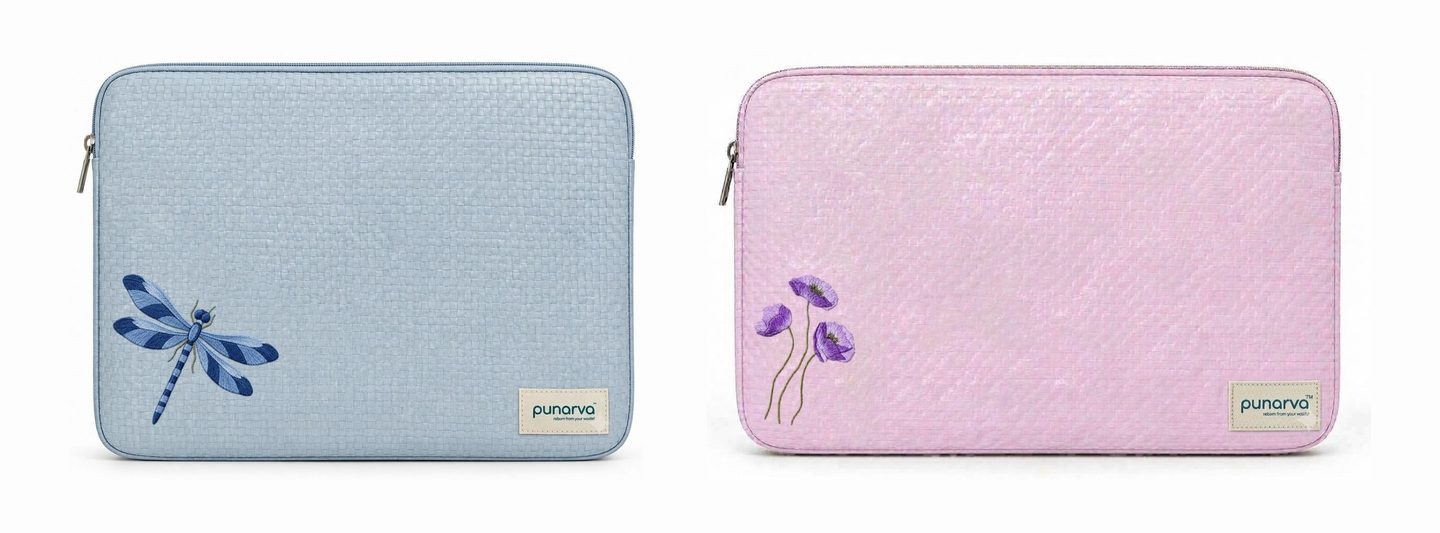
Our story
Every thread has a name.
Punarva means reborn. We take PP raffia, the woven plastic of everyday sacks and bags, and give it a second life as something you'll carry every day.
Why we start with raffia
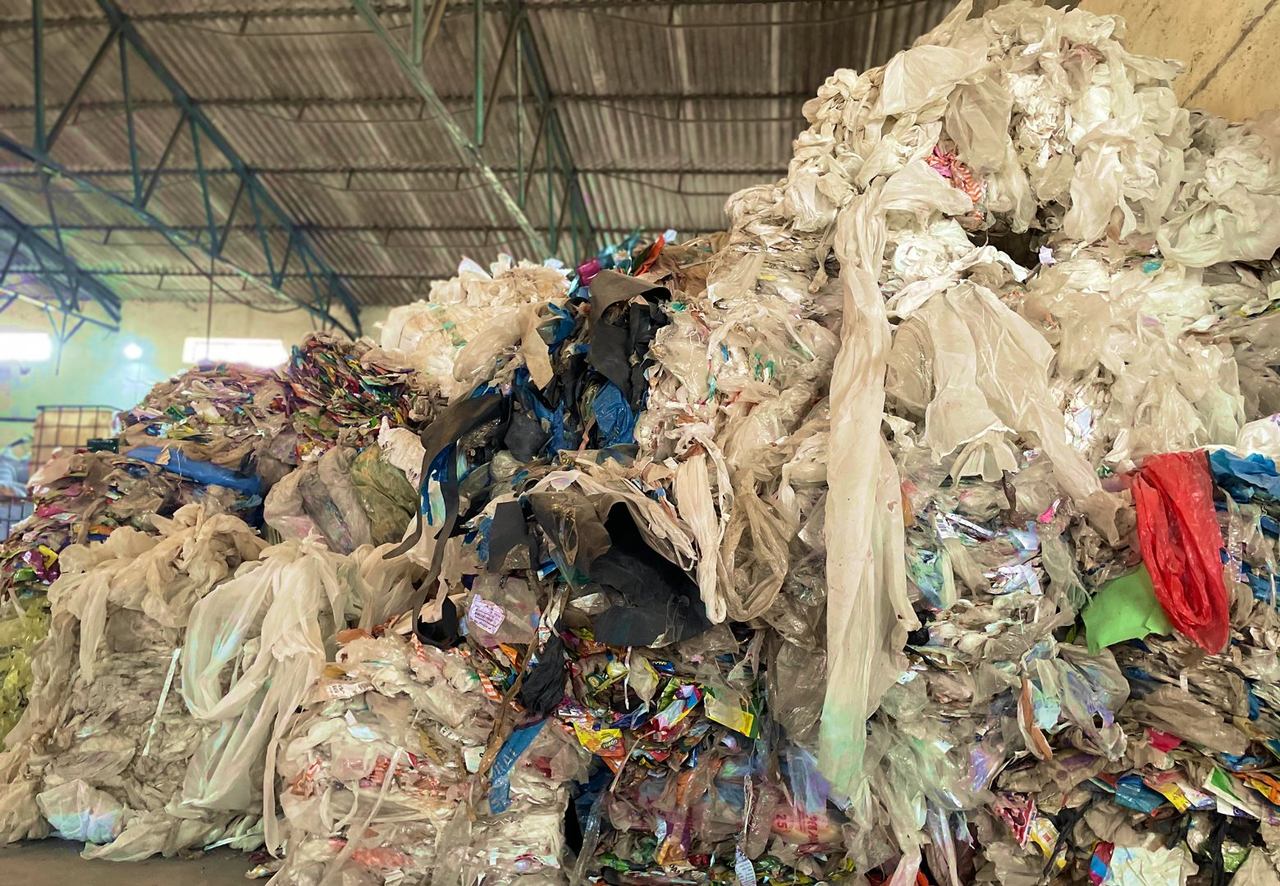
You've seen them everywhere. The woven plastic sacks that carry India's rice, cement, sugar and fertiliser. They're made from PP raffia, and India makes more than 2.5 million tonnes of it every year.
Each sack does its job for a few months. Then it's done. Every year, around two million tonnes of them are thrown away.
Of every 10 sacks thrown away, only 2 or 3 are recycled
Recycled Maybe Not recycled
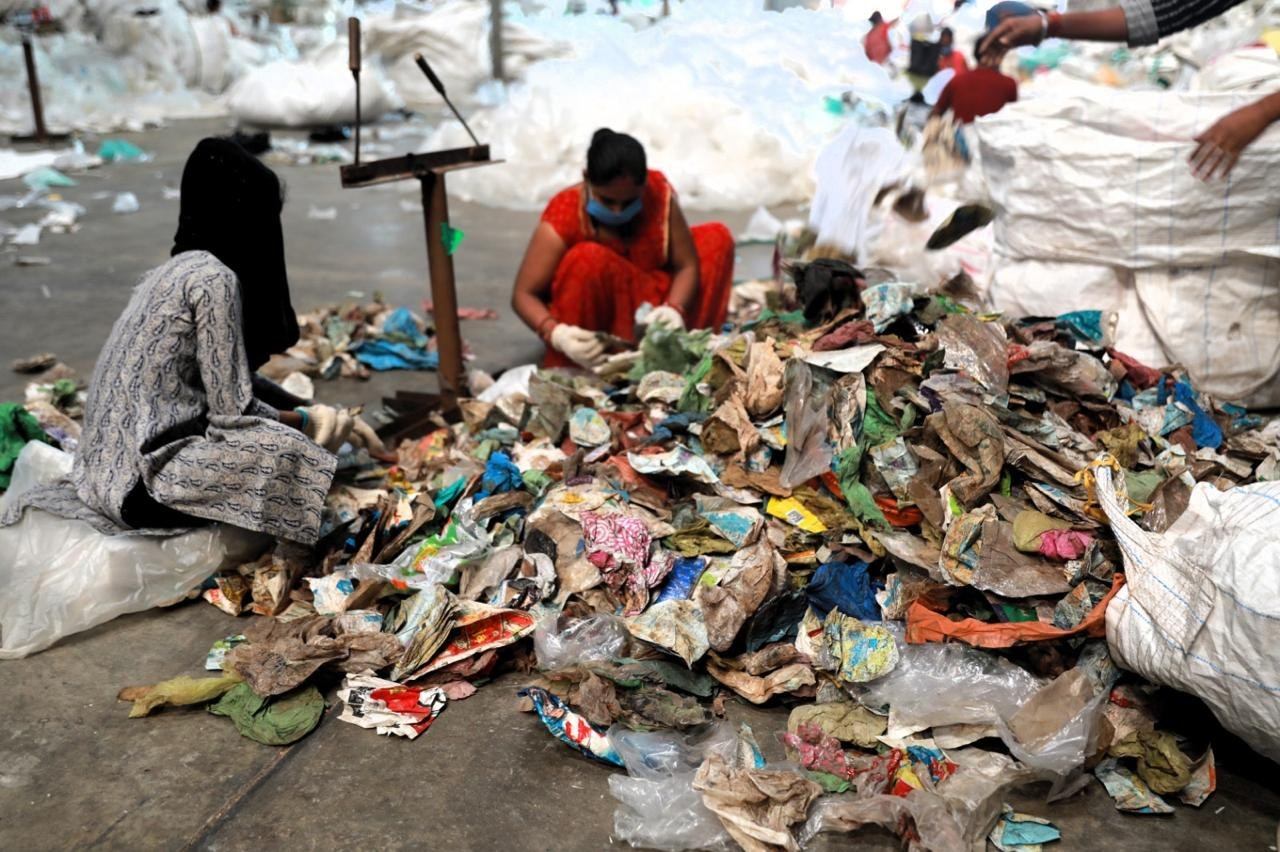
And most of them stop there. To a recycler, a used sack is too light, too dusty and too cheap to be worth the trouble. So most of these sacks are never recycled. They pile up at the edge of fields, in drains and at dump sites. No one even keeps official count of where they end up.
That's the gap Punarva was built for.
We work with the waste-pickers who collect these sacks, and we turn them into something worth keeping. Each sleeve is made and hand-embroidered in India from 30% raffia waste. And we trace every bit of it back to the place it was collected.
A sack that nobody wanted becomes a sleeve you'll carry for years. And each one has a story you can scan and follow.
Every thread has a name.
Production: CPMA PP demand for FY25 × the 35% raffia share. Waste and recycling figures are estimates (Mutha et al. 2006; CSE 2019). India has no official tracking of raffia waste.
The process: from sack to sleeve
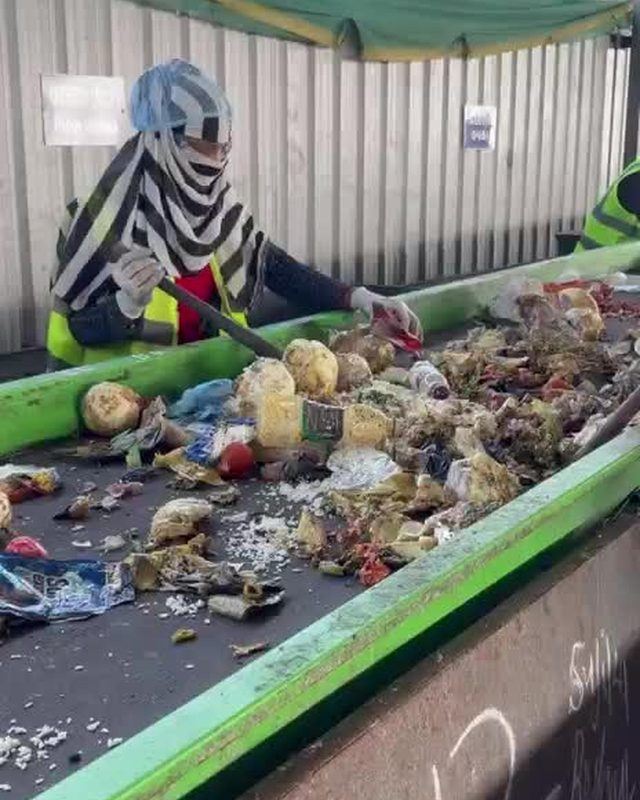
- Waste segregated. Discarded PP raffia sacks are sorted by hand.
- Waste washed. The sorted sacks are washed clean.
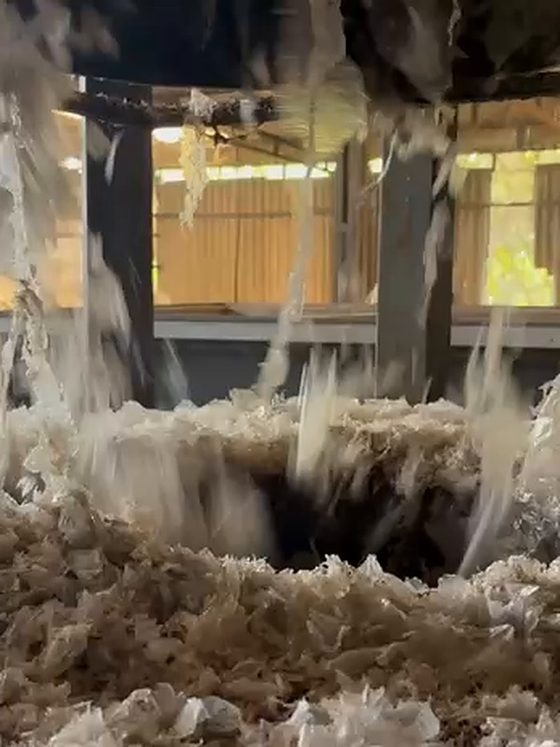
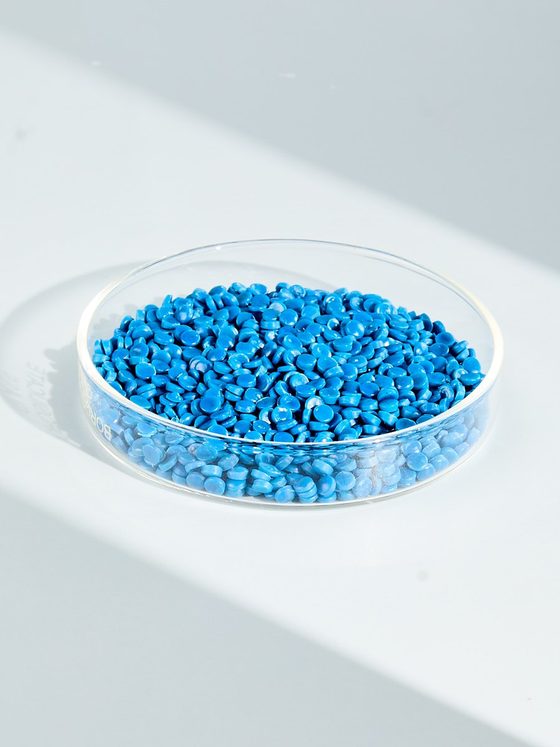
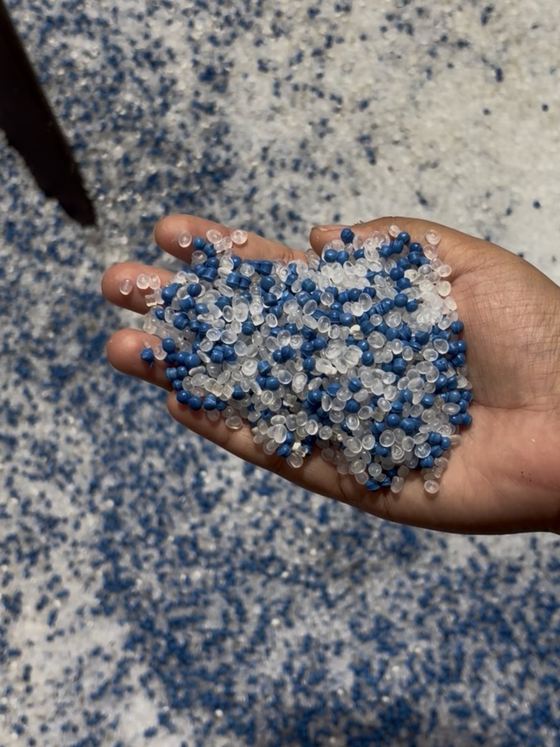
- Waste made into granules. The clean raffia is turned into recycled granules.
- Granules mixed. 100% recycled granules are mixed with virgin granules.
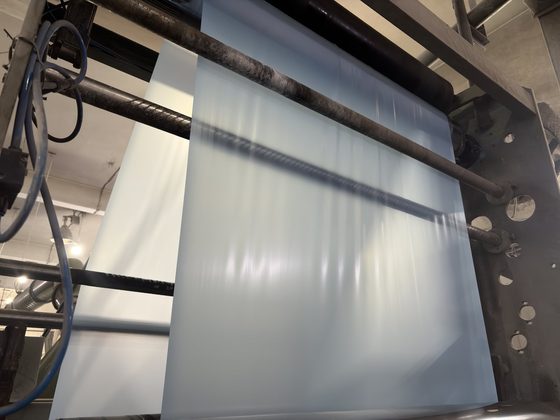
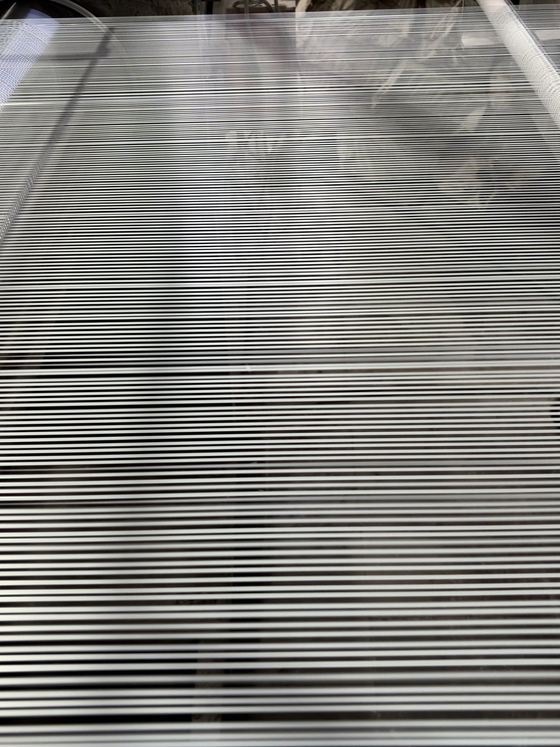
- Extrusion and sheet making. The mix is extruded into a thin plastic sheet.
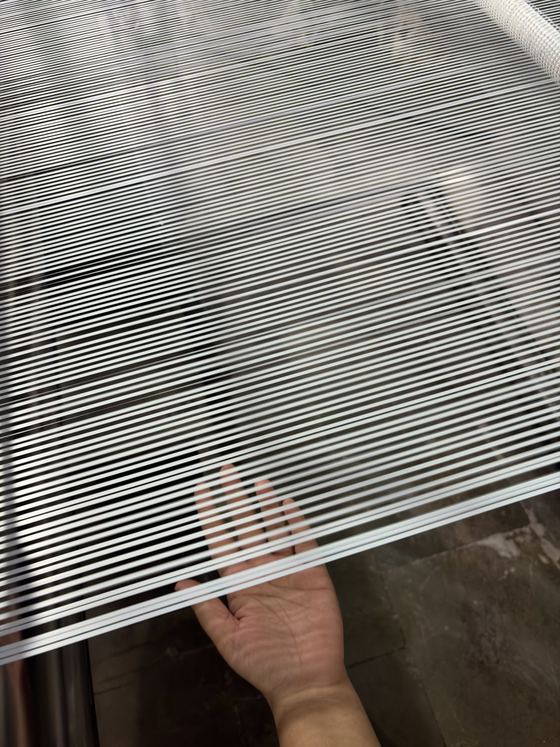
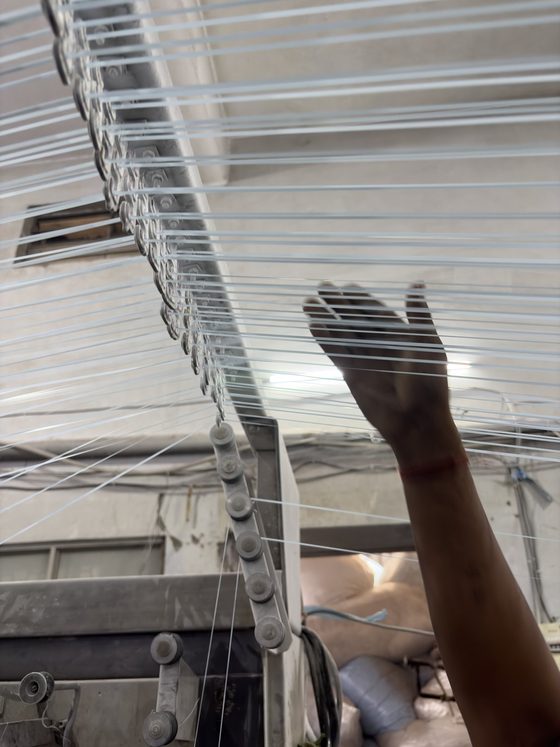
- Slitting into thread. The sheet is slit into fine tapes.
- Stretching. The tapes are stretched to make them strong.
- Winding. The tapes are wound onto bobbins.
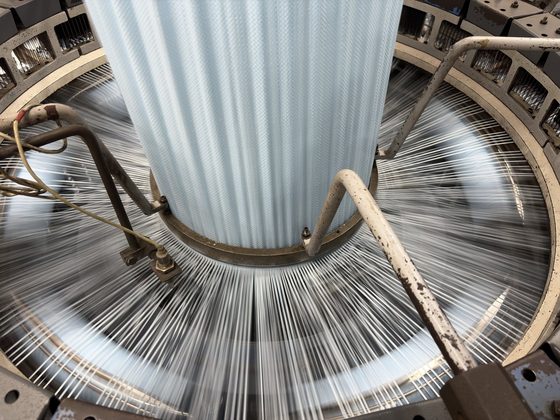
- Fabric weaving. The tapes are woven into fabric.
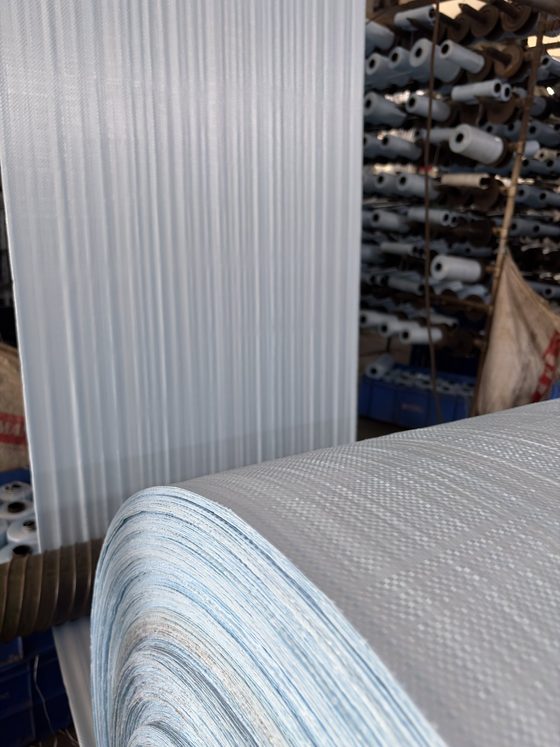
- Fabric roll formation. The woven fabric is wound into rolls.
- Bag making. Each sleeve is cut, stitched, hand-embroidered and tagged with a QR code that tells its journey.
Where our waste comes from
Our waste is collected from across India. Every bag has a QR code on the inside. Scan it and you get 100% visibility into where the waste in your bag came from.
Find the QR code
It's on the label inside your bag.
Scan it
See exactly where the waste in your bag was collected.
What makes it more sustainable
- Waste, not virgin plastic. 30% of every sleeve is PP raffia that had already been thrown away.
- Fully traceable. We know who brought in every batch of waste and where it was collected.
- Made to last. PP raffia doesn't tear easily or rot, so a sleeve can stay in use for years.
- Handmade in India. Every sleeve is made and embroidered by hand in India.
How it compares
A quick, honest look at waste PP raffia next to new plastic.
| Waste PP raffia | Virgin plastic | |
|---|---|---|
| Where it comes from | Discarded sacks | New fossil fuel |
| Keeps waste out of landfill | Yes | No |
| Biodegradable | No | No |
| Water-resistant | Yes | Yes |
| Durability | High | High |
What we're still working on
We'd rather be clear about our limits than overclaim.
- It's still plastic. Giving PP raffia a longer life keeps it out of the environment, but it doesn't make it biodegradable.
- 30% is a start. The rest of the sleeve, such as the zip and embroidery thread, is new material.
- Repair before replace. If your bag has a minor tear, email us a photo of it along with your proof of purchase or receipt and we'll let you know if we can repair it in-house. Repairs are free. You only pay for shipping.
Care is part of it
The longer a sleeve lasts, the more its waste is worth. Don't wash it. Wipe it with a moist cloth only, let it air dry, and don't iron it.